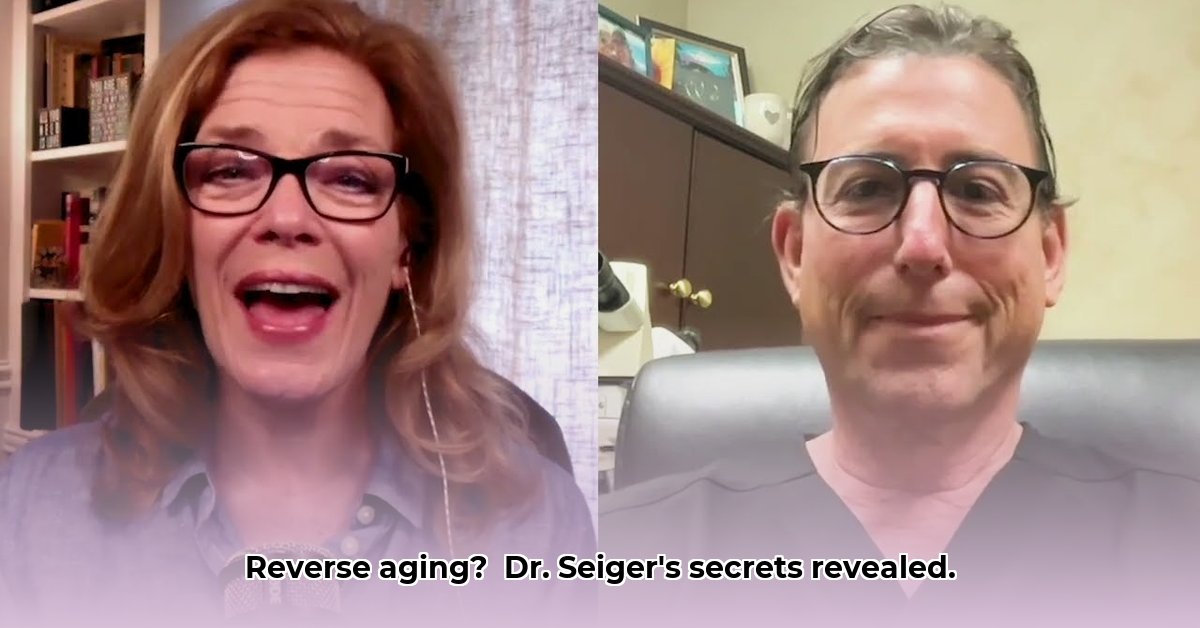
Dr. Eric Seiger, DO, has developed novel techniques in facial rejuvenation and varicose vein treatment, emphasizing minimally invasive approaches for potentially faster recovery and improved cosmetic outcomes. This article reviews these techniques, focusing on their clinical relevance and the available evidence supporting their efficacy and safety. We will also compare them to established methods, acknowledging the limitations of currently available data. For more information on Dr. Seiger's practice, visit his website.
The HourLift Mini Lift: A Minimally Invasive Facelift Approach
The HourLift Mini Lift is a less invasive facelift technique designed for patients with mild to moderate signs of facial aging, such as slight sagging or wrinkles. The procedure involves small incisions and repositioning of underlying tissues to achieve a lifted appearance. While patient testimonials suggest shorter recovery times compared to traditional facelifts, robust, long-term studies are needed to fully assess the HourLift's efficacy and safety relative to established techniques. Further research is crucial to determine its long-term effects and optimal patient selection criteria. Is the HourLift's purported quicker recovery time truly significant, and how does its longevity compare to traditional methods? These are important questions requiring further investigation.
Varicose Vein Treatment: Minimally Invasive Techniques
Dr. Seiger employs minimally invasive techniques for varicose vein treatment, aiming to minimize discomfort, scarring, and recovery time compared to traditional surgical approaches. These techniques involve advanced methods to close or remove damaged veins. Initial patient reports suggest effectiveness in improving comfort and appearance. However, the absence of large-scale, long-term studies necessitates further research to definitively establish the long-term efficacy and safety of these novel approaches and their comparison to established methods. How do these minimally invasive approaches compare in terms of long-term vein recurrence rates compared to traditional surgical ligation and stripping? This question must be addressed by future studies.
Comparison to Established Methods
The following table compares Dr. Seiger's techniques to established methods in facial rejuvenation and varicose vein treatment. Note that the limited data available on Dr. Seiger's techniques makes definitive comparisons currently challenging.
| Feature | HourLift Mini Lift | Traditional Facelift | Varicose Vein Treatment (Dr. Seiger) | Traditional Varicose Vein Surgery |
|---|---|---|---|---|
| Invasiveness | Less invasive | More invasive | Less invasive | More invasive |
| Downtime | Shorter (reported) | Longer | Shorter (reported) | Longer |
| Recovery Time | Faster (reported) | Longer | Faster (reported) | Longer |
| Cost | Potentially lower | Potentially higher | Potentially lower | Potentially higher |
| Scarring | Minimal | Often more noticeable | Minimal | Often more noticeable |
| Patient Suitability | Mild to moderate aging | More pronounced aging | Manageable varicose vein cases | More severe varicose veins |
Conclusion: The Need for Further Research
Dr. Seiger’s HourLift Mini Lift and varicose vein techniques show promise, offering potentially less invasive alternatives with faster recovery times. However, larger, long-term clinical trials are essential to rigorously evaluate their efficacy, safety, and cost-effectiveness compared to established procedures. These trials will provide the necessary evidence for informed patient care and allow for confident comparisons with traditional approaches. Only through further research can we fully understand the long-term benefits and risks of these innovative techniques.
Key Takeaways:
- Dr. Seiger's techniques offer potentially less invasive alternatives with shorter recovery times.
- Limited data necessitates further research to establish long-term efficacy, safety, and cost-effectiveness.
- Comparisons to established methods require more rigorous clinical trials.